Toyota’s Next Sports Car Will Have a Powerful Big Brother: The Lexus LFA Successor
The high-performance coupes are set to debut on December 5.

Toyota and Lexus have spent what feels like years teasing their upcoming halo sports coupes. The automakers have gradually peeled back the curtain, showcasing a pair of concepts at the 2025 Goodwood Festival of Speed and conducting extensive development testing on the Nürburgring Nordschleife.
The long wait for a full reveal is almost over. Toyota has confirmed that the new models will finally make their debut on Friday, December 5. Chairman Akio Toyoda and Chief Branding Officer Simon Humphries will lead the presentation, which the company will stream live. The public will get its first in-person look at the vehicles at the Tokyo Auto Salon in January 2026.




What We Know So Far About Toyota and Lexus’ Upcoming Halo Models
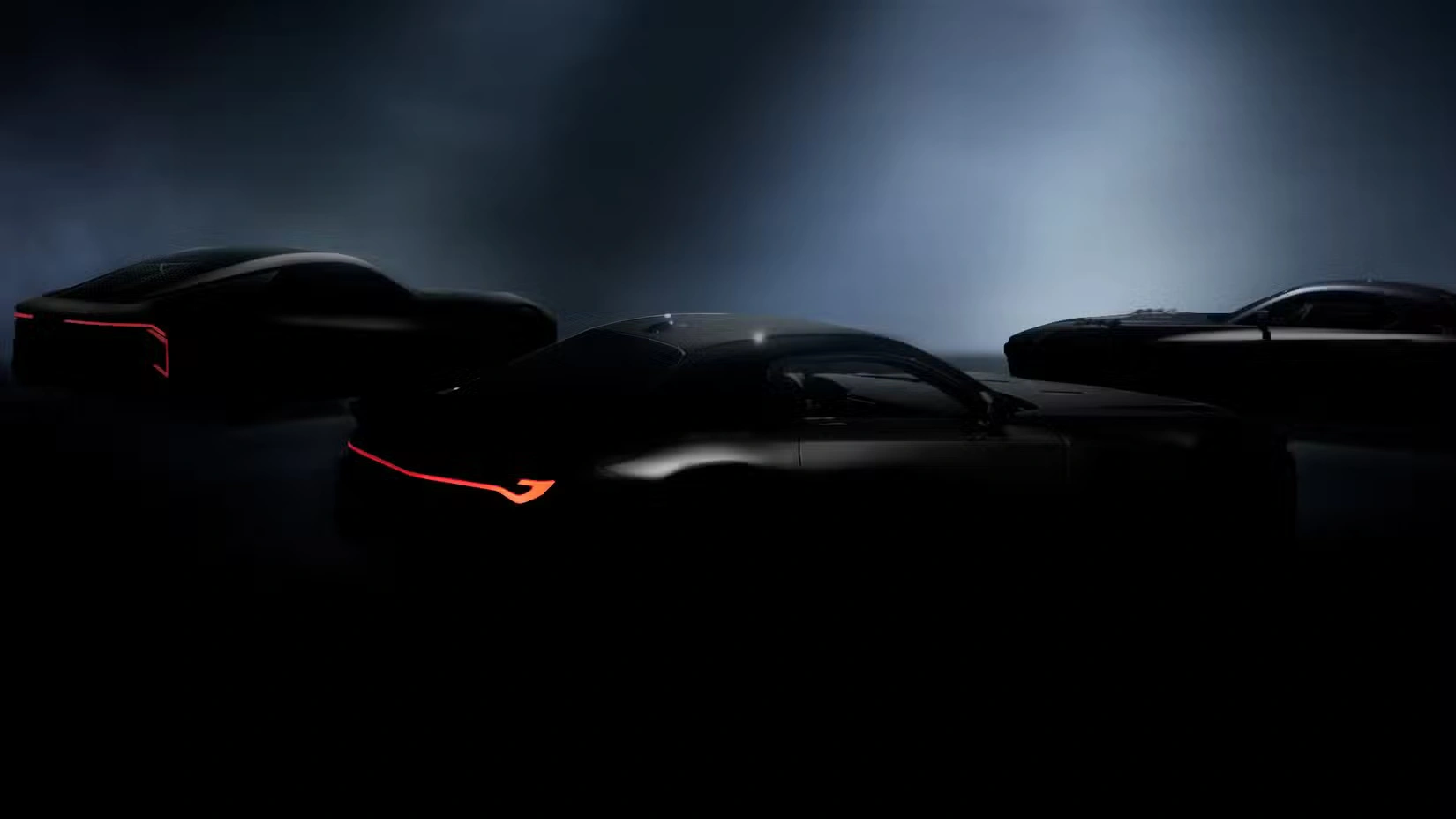
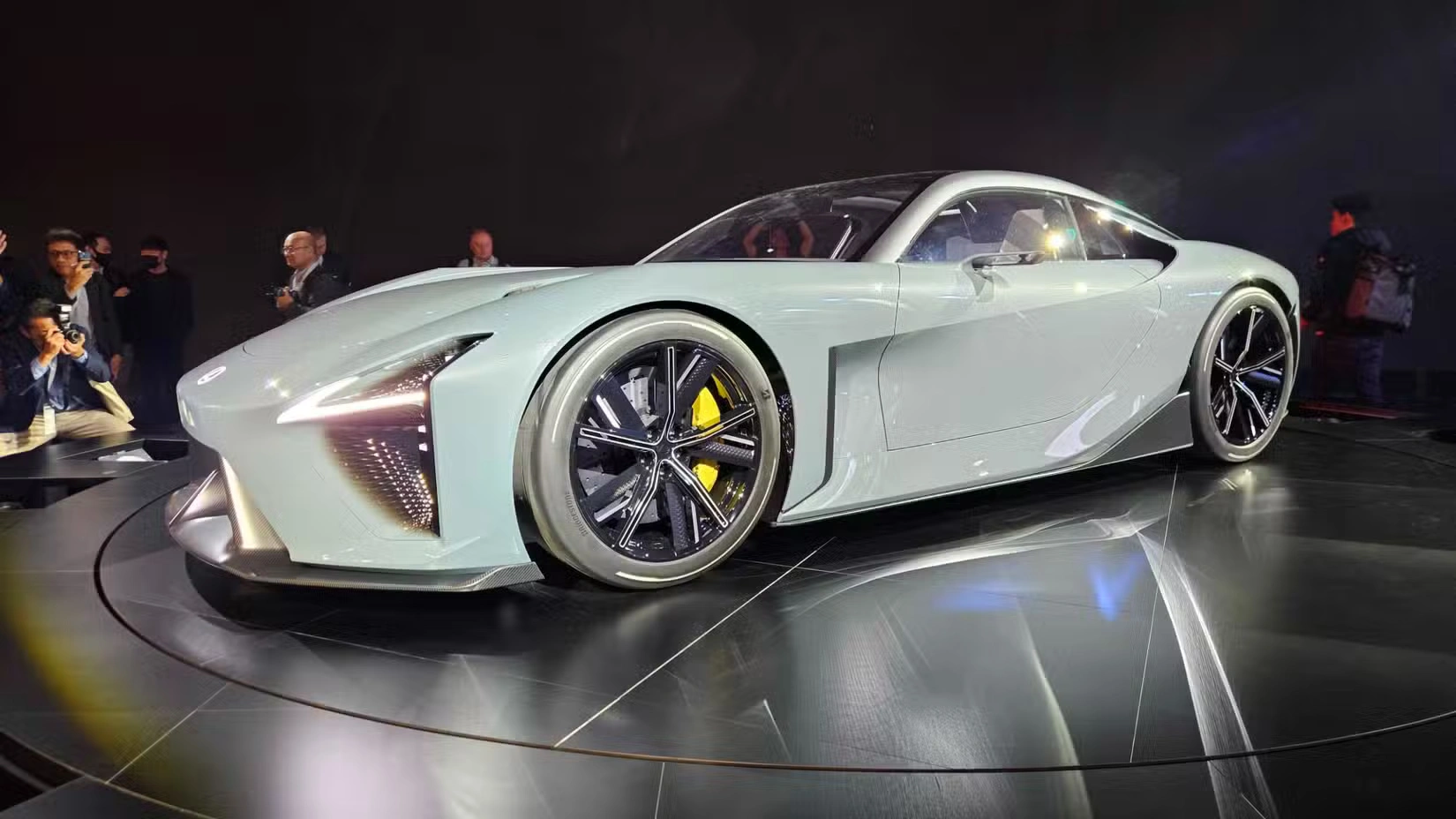
Toyota has released a dark, silhouette-style teaser image alongside its livestream announcement. The vehicle on the far left, featuring taillights that sweep downward, is clearly the Lexus LFR—its lighting signature matches the concept shown at the 2025 Goodwood Festival of Speed. In the middle sits the Toyota GR GT, the brand’s new flagship performance model. The third car, positioned on the right and sporting prominent hood louvers, is expected to be the GR GT3 race-spec variant.
Akio Toyoda has already confirmed that both models will be powered by a twin-turbocharged V8 paired with hybrid assistance. The engine is reportedly derived from the turbocharged 2.0-liter four-cylinder found in the mid-engine GR Yaris concept, which alone is said to produce around 400 horsepower. By combining two of these units, Toyota achieves a 4.0-liter V8 configuration. While official output figures haven’t been released yet, Toyota has benchmarked the cars against the Mercedes-AMG GT—specifically the GT 63 S E Performance, which delivers up to 805 horsepower from its plug-in-hybrid twin-turbo 4.0-liter V8.
What Sets the Toyota and Lexus Versions Apart
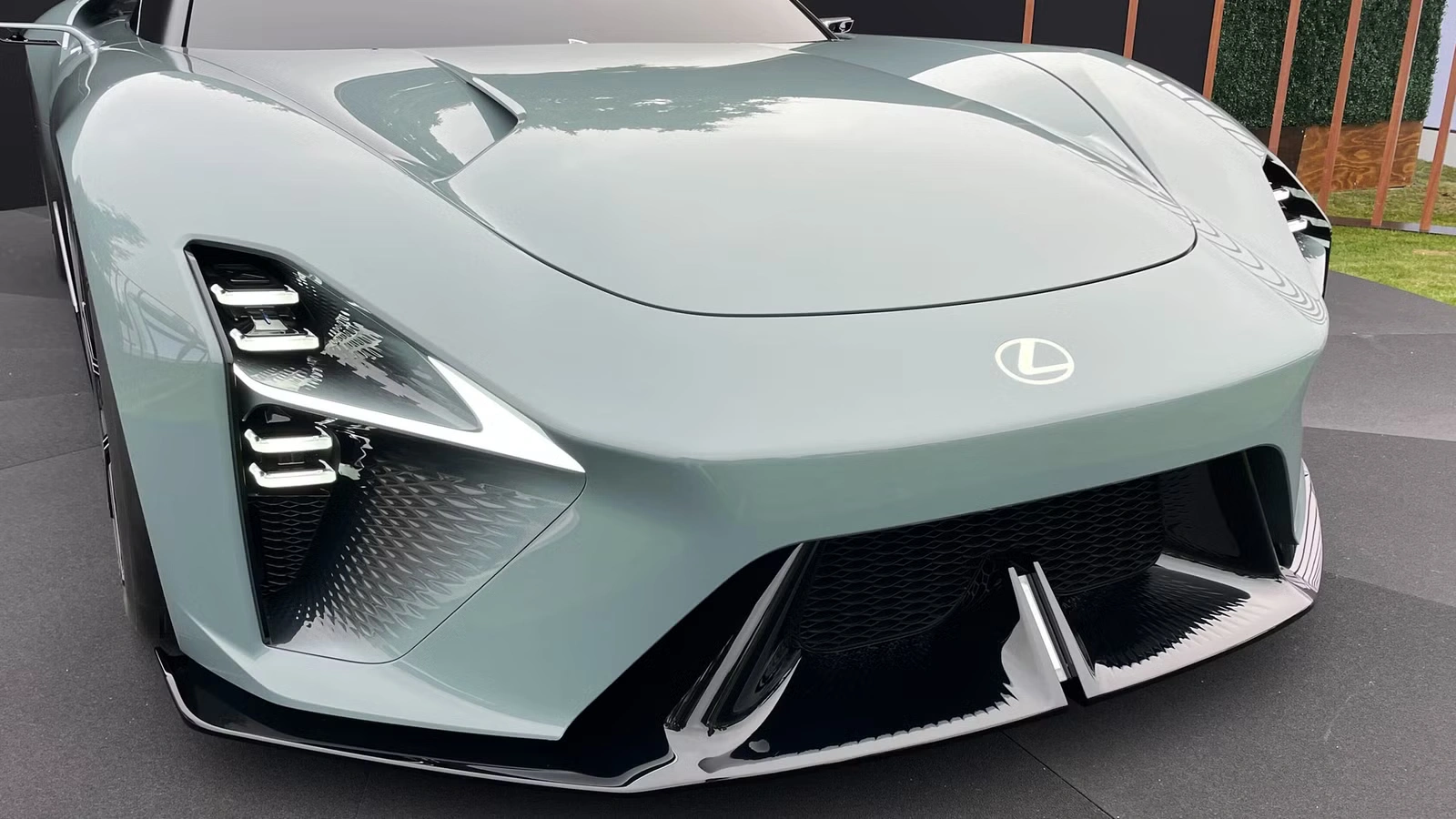
Based on the concepts revealed so far, the Toyota and Lexus halo coupes won’t be identical, even though they share the same powertrain and underlying platform. The Lexus variant features vertically oriented headlights and smoother, more refined bodywork, giving it a premium, upscale appearance. The Toyota version, while similar in overall proportions, sports a more aggressive front end with a distinct nose design and functional hood vents.

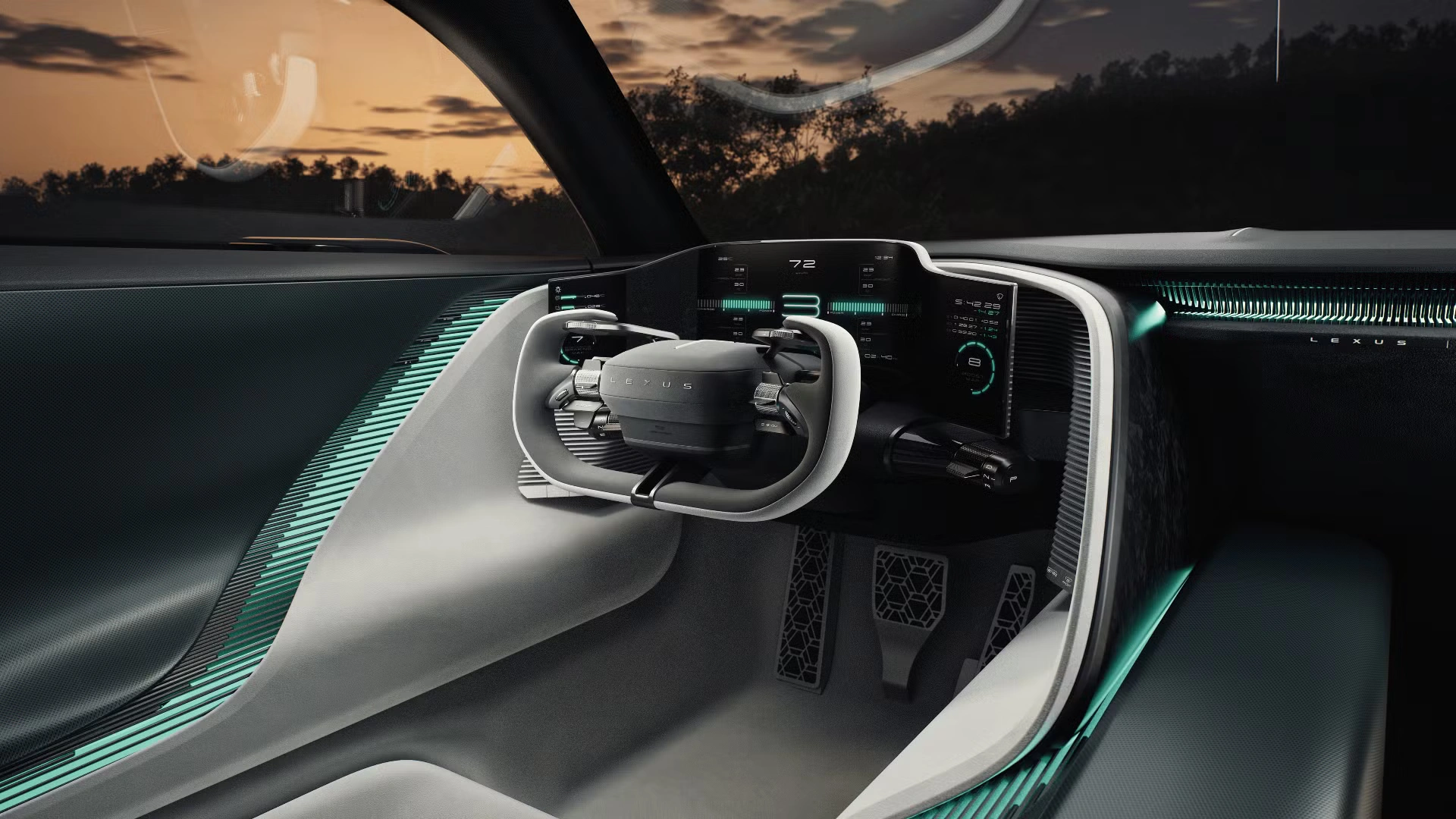
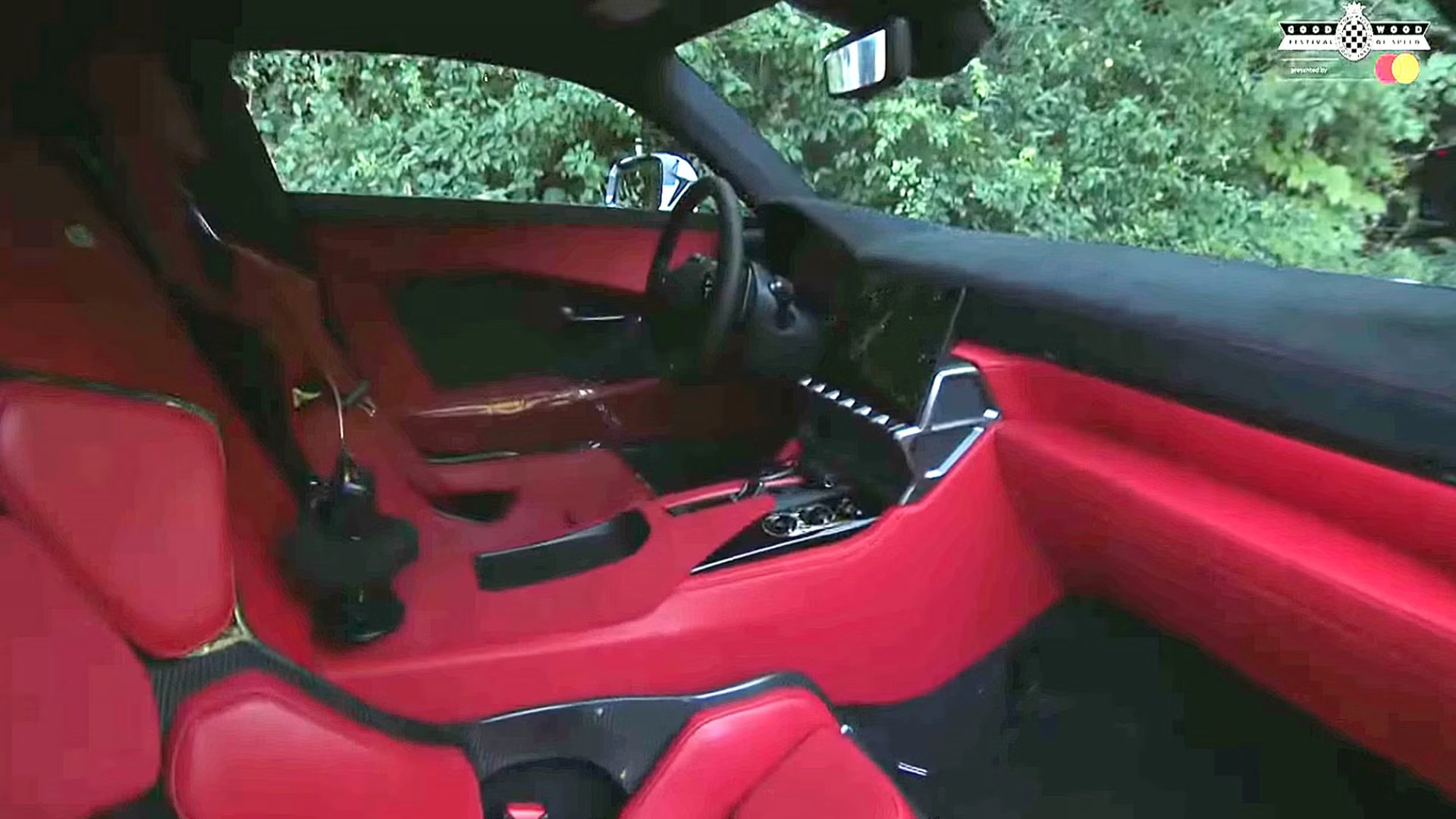
The interiors also appear to differ significantly between the two models. The Lexus cabin leans heavily into a high-tech, futuristic theme, featuring a yoke-style steering wheel, a fully digital instrument cluster, and a wraparound cockpit-style layout. The Toyota’s interior, by contrast, takes a more traditional performance-focused approach, with deeply bolstered seats, a center stack housing a touchscreen and metal toggle switches, and a conventional steering wheel for the driver.
Pricing for both models remains unknown. For reference, the most expensive coupe currently in Lexus’ lineup is the LC, which starts at $101,700. Given that these new halo models will sit at the very top of the Toyota and Lexus performance range, they are expected to command significantly higher prices. In keeping with the brand’s premium positioning, the Lexus version will likely carry a higher price tag than its Toyota counterpart.
It’s still unclear when either model will reach showrooms. With their online debut set for December and a public unveiling scheduled for January, there’s a good chance the production versions could arrive before the end of 2026.