Mercedes-Benz Design Chief Behind Modern Look to Step Down
Mercedes-Benz Chief Design Officer Gorden Wagener has decided to step down, with his successor set to come from the AMG division.

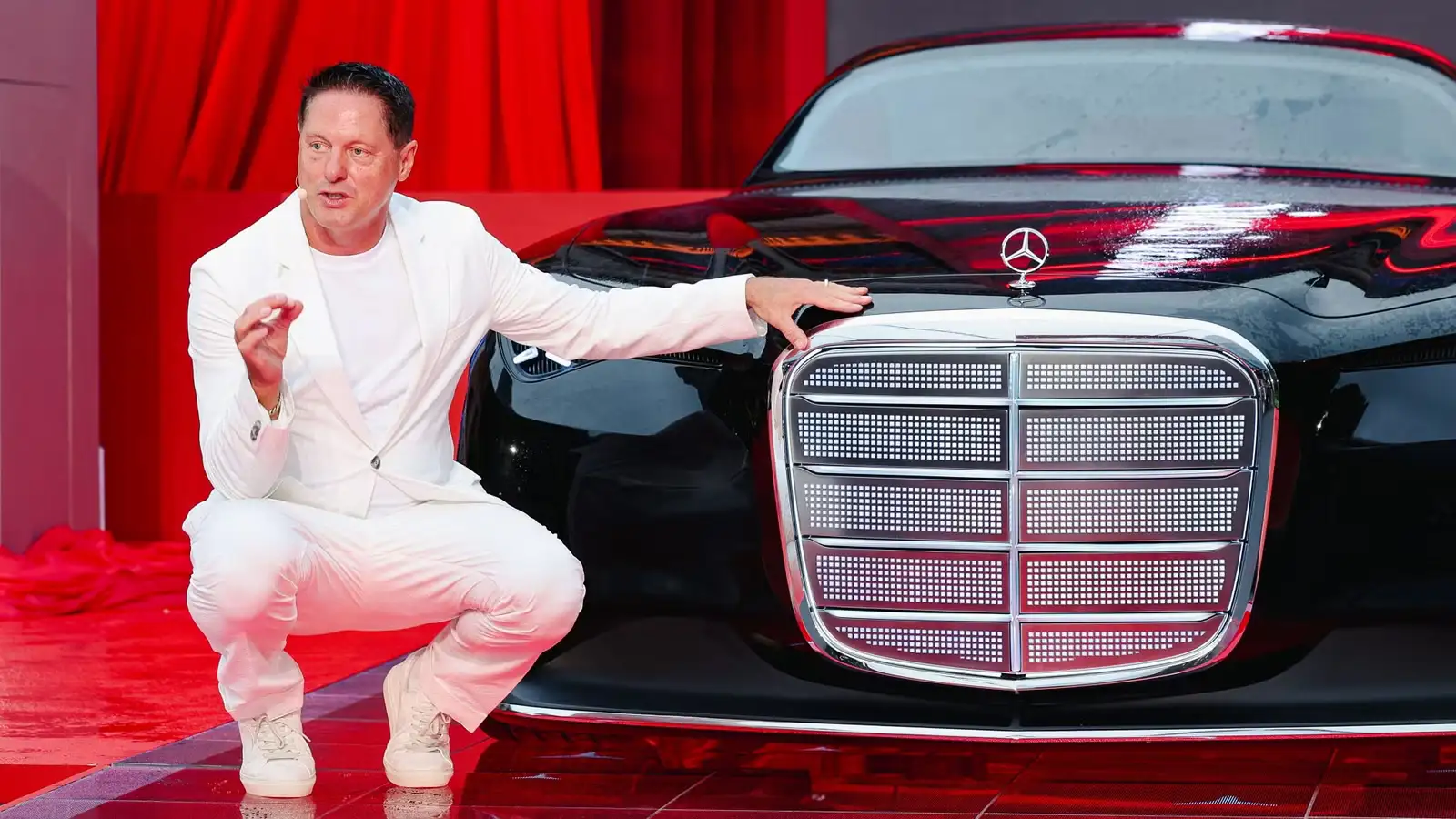
Mercedes-Benz Chief Design Officer Gorden Wagener will step down from his role on January 31, 2026, ending nearly three decades with the company. Wagener is widely regarded as the driving force behind Mercedes’ “Sensual Purity” design philosophy, characterized by smooth surfaces, rounded proportions, and flowing lines. His influence is evident in vehicles such as the 2007–2013 S-Class, as well as striking concept models including the Vision Iconic and Vision Mercedes-Maybach 6, all of which were shaped under his direction. Wagener also led the design and launch of the EQS sedan, a model that sparked debate but ultimately influenced the styling of newer Mercedes vehicles like the GLC SUV and the recently unveiled CLA-Class.
A Distinguished Tenure at Mercedes-Benz
Gorden Wagener began his design career in 1995, gaining experience as an exterior designer with manufacturers such as Mazda and General Motors before joining Mercedes-Benz in 1997. His rise within the company was swift—by 1999, he had been appointed head of the exterior and interior styling department, where he oversaw the design of key models including the GL-, ML-, and R-Class SUVs.




One of Wagener’s earliest and most notable achievements was the Mercedes-McLaren SLR, a project he worked on alongside legendary automotive engineer Gordon Murray. He also led the design of the CLS-Class, a model that went on to become one of Mercedes-Benz’s most iconic vehicles of the past 25 years.
[Wagener’s] creativity and his sense for the future of automotive design have sustainably enriched Mercedes-Benz. I would like to thank Gorden for his commitment, his exceptional work and his lasting influence – and wish him all the best for the future.
–Ola Källenius, Mercedes-Benz Board of Management Chairman
In 2008, Wagener was appointed Vice President of Design at Daimler AG, a role that enabled him to formalize Mercedes-Benz’s “Sensual Purity” design philosophy. One of the first production models to showcase this new visual direction was the facelifted 2014 E-Class, a heavily revised version of the W212 that abandoned the sharp fender lines and angular body surfacing of its predecessor in favor of cleaner shapes and more fluid contours.


The redesigned S-Class (W222) followed soon after, continuing the shift with an even more refined and streamlined appearance. Over time, Sensual Purity became a defining principle of Mercedes-Benz design, influencing models such as the SL roadster and extending even to unexpected entries like the softened, all-electric G-Class with EQ Technology.
What’s Next for Mercedes-Benz Design?
According to an official company statement, Wagener will step down on January 21, 2026, by his own decision. Succeeding him will be Bastian Baudy, currently head of Mercedes-AMG design. Baudy brings an impressive portfolio to the role, having played key roles in the design of the current E-Class, the EQE sedan, and the GLC and GLC Coupe, along with the striking AMG Vision Gran Turismo concept revealed in 2013.
While it remains to be seen how closely Baudy will adhere to Wagener’s design philosophy, his work clearly reflects a deep understanding of his predecessor’s visual language, positioning him well to guide Mercedes-Benz into its next design era.

One aspect many hope will endure is Wagener’s renewed emphasis on physical modeling. Shortly after becoming Mercedes-Benz’s design chief, he championed a return to clay models following years of heavy reliance on computer-aided design—a decision widely credited with restoring a truly sculptural quality to the brand’s vehicles. Supporters hope Baudy will continue to value this hands-on approach, which allows designers to experience proportions at full scale, walk around a model, and observe how surfaces interact with light from different angles—something no digital rendering can fully replicate.